Jack Youngerman American, 1926-2020
-

-
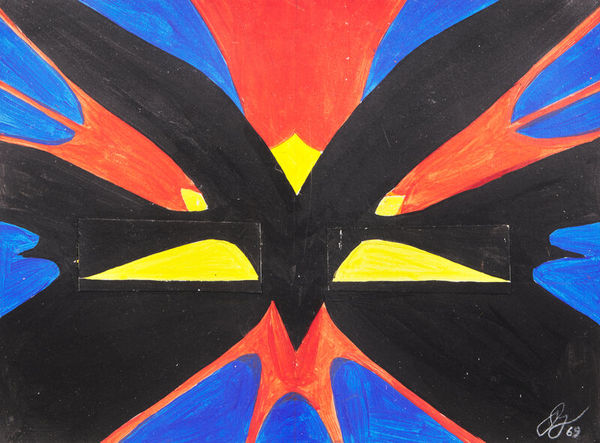
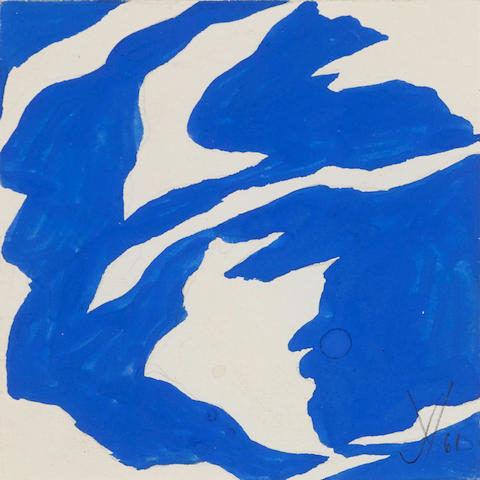
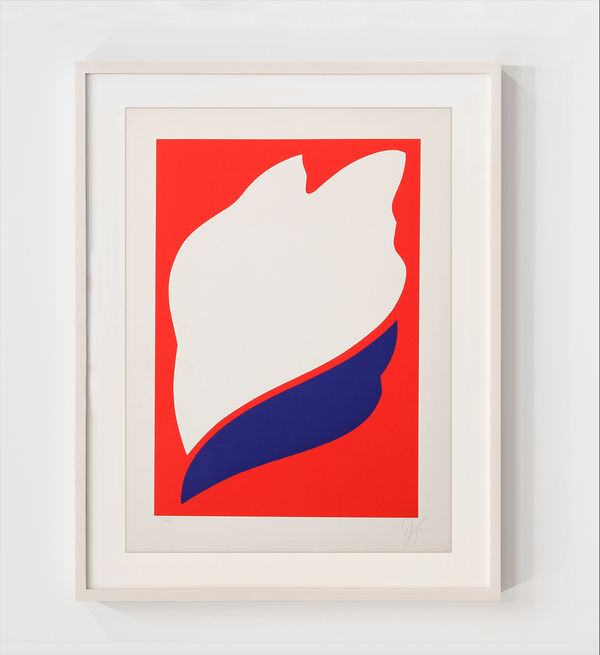
Emerging in the postwar period, Jack Youngerman developed a distinctive abstract language grounded in organic form, spatial clarity, and formal reduction. Working in dialogue with contemporaries associated with geometric abstraction, Youngerman explored the expressive potential of simplified shapes derived from natural motifs, including leaves, flowers, and vegetal growth. His compositions balance rigorous structure with a sense of vitality, revealing an ongoing engagement with the rhythms and patterns of the natural world. Youngerman's work shares affinities with the reductive aesthetics of Ellsworth Kelly, particularly in its emphasis on contour, color, and the transformation of observed forms into abstract visual statements. Yet Youngerman maintained a unique sensitivity to process and materiality, often allowing subtle irregularities and compositional tensions to animate his surfaces. His paintings and prints occupy a significant position within the history of postwar American abstraction, demonstrating how organic reference and formal invention could coexist within a modernist framework.
-
Works
-
Untitled, 1951
-
Untitled, 1969
-
Untitled, 1977
-
Untitled, 1959
-
April 24, 1965, 1965
-
Untitled Study #19, 1968-1970
-
Blue White, 1961
-
Untitled, 1959
-
Untitled, c. 1966
-
Untitled, c. 1966
-
Untitled, c. 1966
-
Untitled, c. 1966
-
Untitled, 1973
-
Untitled, 1966
-
Untitled, 1966
-
Untitled, 1966
-
Untitled, 1966
-
-
Contact Form
Send me more information on Jack Youngerman