Donald Baechler
-

Photo Credit: Jason Schmidt
-
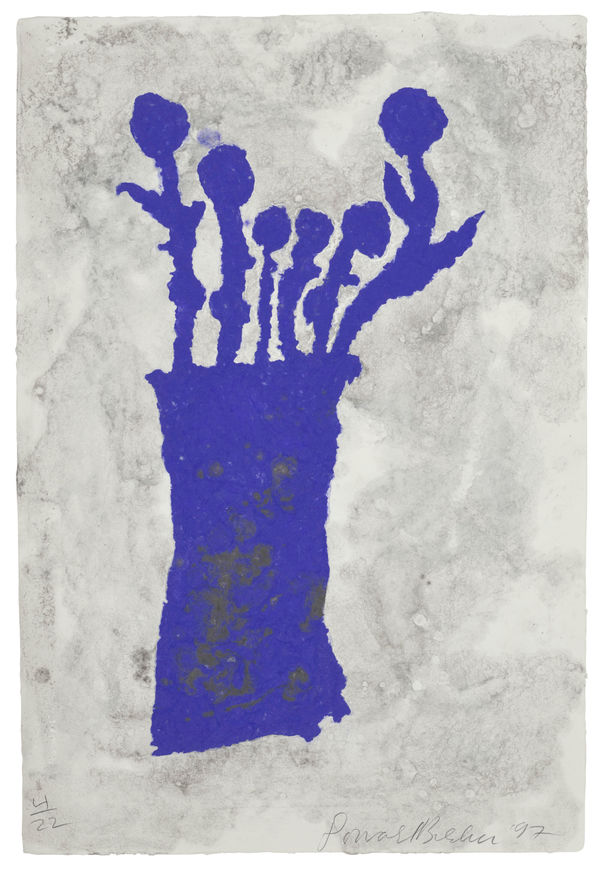
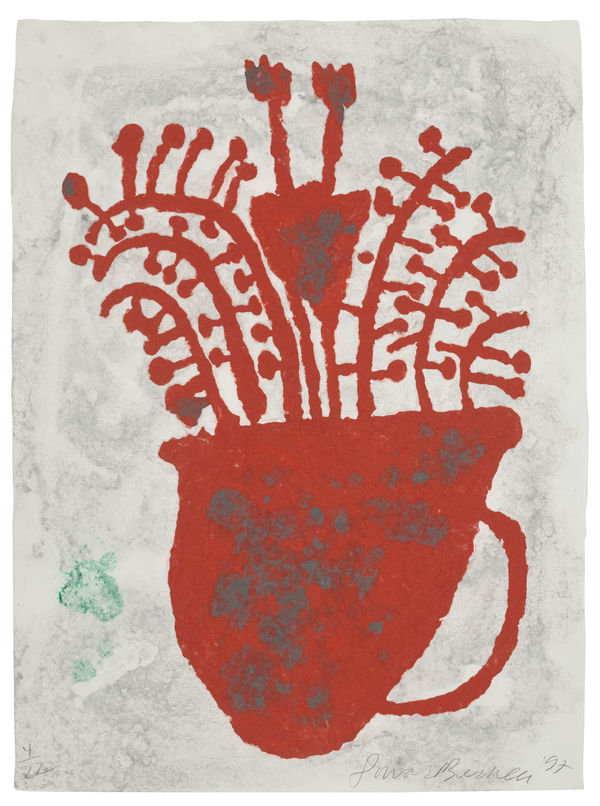
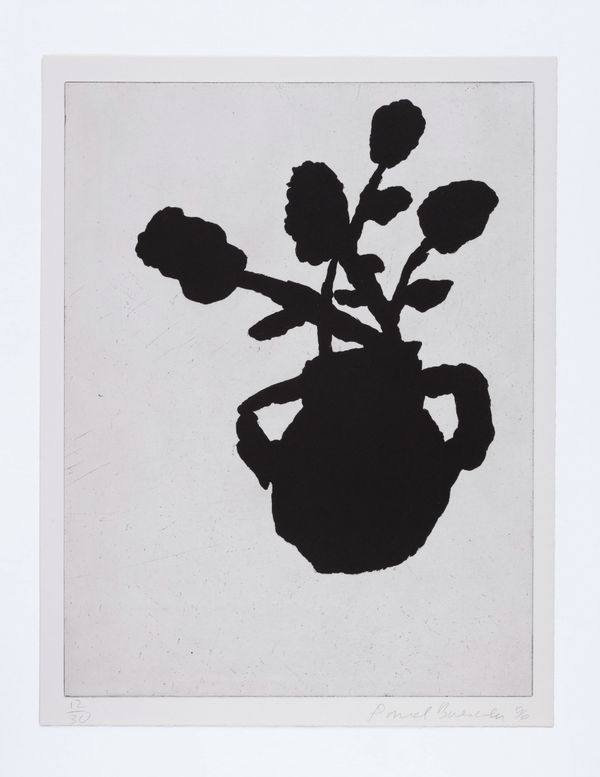
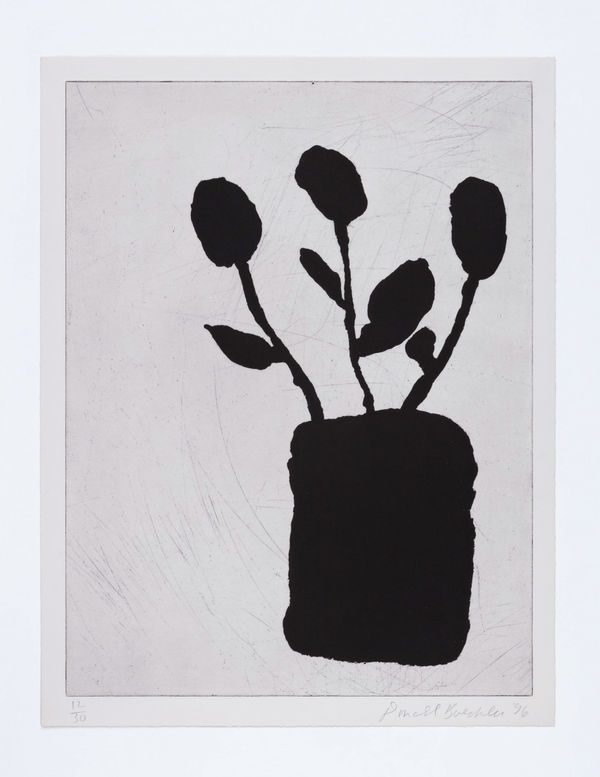
Donald Baechler’s (1956–2022) artistic practice is characterized by a sustained engagement with contrast and contradiction. His works convey an apparent directness and a distinct naïveté, while their carefully constructed backgrounds, composed of collaged elements and layered surfaces, reveal a deliberate and methodical process. Baechler’s creative approach originated in an extensive archive of popular imagery and found objects, accumulated over years of photographing, observing, and collecting. His paintings may be understood as distilled outcomes of this cumulative practice, in which disparate fragments and stratified layers are synthesized into what the artist described as an “illusion of history.” Among his principal influences, Baechler identified Cy Twombly and Giotto. Baechler first exhibited his work in 1981 at the Tony Shafrazi Gallery in New York, where his pieces were presented alongside those of Keith Haring and Jean-Michel Basquiat. His oeuvre encompasses painting, collage, printmaking, and sculpture.
-
-
Born in 1956 in Hartford, Connecticut, Baechler lived and worked in New York. He studied at the Maryland Institute College of Art in Baltimore from 1974 to 1977 and subsequently attended Cooper Union in New York from 1977 to 1978. Baechler’s work is represented in numerous major institutional collections, including the Museum of Modern Art, the Whitney Museum of American Art, and the Solomon R. Guggenheim Museum in New York; the Museum of Contemporary Art, Los Angeles; the Museum of Fine Arts, Boston; the Philadelphia Museum of Art; and the Centre Georges Pompidou and the Musée National d’Art Moderne in Paris, among others.
-
Works
-
Sit Scent, 2016
-
Untitled (Cast Flowers), 2006
-
Untitled (Skull), 2010
-
Yellow and Blue, 2012
-
Purply-brown Flower, 2010
-
Purply-brown Flower, 2010
-
Flower I, 1997
-
Flower II, 1997
-
Flower III, 1997
-
Rose (Blue), 2015
-
Rose (Lavender), 2015
-
Rose (Peach), 2015
-
Rose (Red), 2015
-
Rose (Brown), 2015
-
Rose (Yellow), 2015
-
Suitcase, 2003
-
Head, 2003
-
Black Flowers, 2019
-
Flower, 1996
-
Flower, 1996
-
Flower, 1996
-
Flower, 1996
-
Flower, 1996
-
Flower, 1996
-
Flower, 2004
-
Flower, 2004
-
Green Carnation, 1993
-
Coney Island, 1994
-
Tulip, 2003
-